

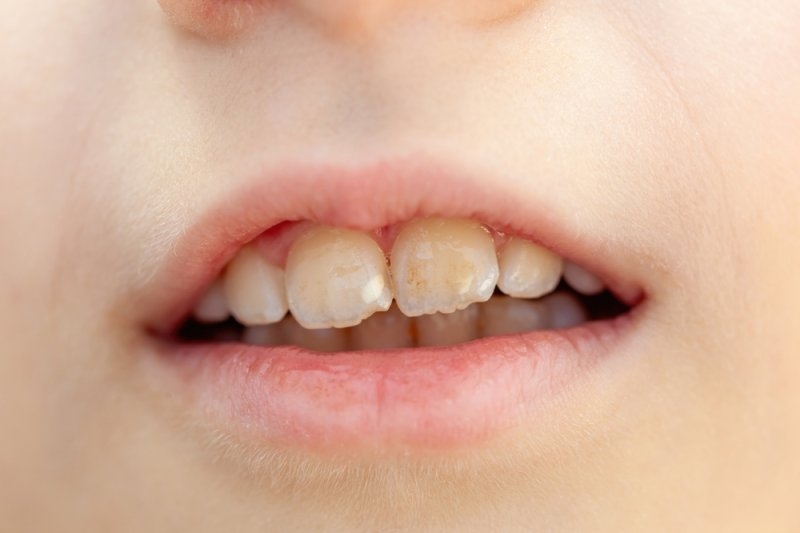
Staring at the bathroom mirror and noticing weird, chalky marks on your smile is a brutal wake-up call. Most people assume these marks are just harmless surface stains from drinking too much coffee or skipping a few flossing sessions. That delusion shatters the second a dentist tells you that you are actually looking at early-stage tooth decay. Ignoring white spots on teeth is a massive hygiene mistake. It is not a cosmetic quirk; it is a structural failure of your physical enamel. Whether you just got your orthodontic hardware removed or you simply have a terrible sugar habit, these spots mean your teeth are actively losing critical minerals.
Must Read: 9 Common Causes of Bleeding Gums With Effective Solutions
These chalky, opaque marks are clinically known as white spot lesions on teeth. They are the direct physical evidence of early enamel decay. When plaque acid sits on your teeth for too long, it aggressively strips away calcium and minerals, leaving behind a weak, porous, and highly discoloured surface.
This is not a stain sitting on top of the tooth. Tooth enamel decalcification means the actual structural integrity of your tooth is completely breaking down. The acid physically dissolves the dense mineral matrix, turning hard protective enamel into a weak, chalky shell that eventually collapses entirely.
Top Pick: Sparkling Water For Teeth: Is It Bad for Enamel and Oral Health?
Figuring out the causes of white spots on teeth means taking a hard, honest look at your daily habits. Your enamel does not just dissolve for absolutely no reason; it breaks down because you are actively feeding the problem.
Food and plaque get permanently trapped under wires and metal brackets. When you refuse to clean properly, the acid silently eats the enamel, leaving massive white squares the exact second the braces come off.
Sipping soda and energy drinks all day absolutely destroys your mouth. The bacteria in your saliva feed on that sugar, vomiting out pure acid that aggressively burns the minerals straight out of your teeth.
Saliva is your natural defence mechanism against acid attacks. If you sleep with your mouth open or take heavy medications that kill saliva production, your teeth sit unprotected against decay.
You cannot magically erase deep lesions overnight, but you can aggressively stop the decay before it requires a drill. Knowing how to remove white spots on teeth at home means executing these daily habits without fail.
Stop using cheap dollar-store paste. Switch to toothpaste loaded with nano-hydroxyapatite, which physically forces calcium and phosphorus back into the microscopic holes in your weak enamel.
Cut the constant snacking and sugar drips. If you drink an acidic energy drink, down it in ten minutes and immediately flush your mouth with water instead of sipping it slowly over three hours.
Scrubbing your teeth like you are cleaning a dirty tile floor destroys your weakened enamel. Use a soft-bristled brush and let the actual chemical paste do the heavy lifting.
Chew gum loaded with high-concentration xylitol immediately after you eat a meal. It physically starves the bacteria in your mouth and forces massive saliva production to wash away the acid attacks.
Grab a professional remineralising cream from your dentist and smear it on your teeth before bed. It acts like a heavy construction crew, actively rebuilding your enamel while you sleep.
When home routines completely fail, you have to throw money at a professional whitening teeth treatment. Dentists do not mess around with cheap whitening strips; they use aggressive clinical tools to alter the damaged structure.
The dentist applies a mild acid to open the pores of the white spot, flooding the dead space with a liquid plastic resin. It hardens under a special light, instantly matching your natural tooth colour and shutting down the decay.
Dentists use a heavy mechanical buffer combined with hydrochloric acid to physically sand off the top layer of ruined enamel, revealing the solid, healthy tooth structure trapped underneath.
For extreme decalcification, where the tooth is structurally destroyed, dentists completely abandon the enamel. They glue custom porcelain covers over the front, permanently hiding the decay and rebuilding your smile from scratch.
Stop ignoring the warning signs inside your own mouth. Figuring out how to handle white spots on teeth means accepting that your current hygiene routine is actively failing. Whether you are battling the immediate aftermath of metal braces or dealing with a brutal, lifelong sugar habit, those chalky marks are a countdown timer to a massive cavity.
Beyond standard plaque buildup, orthodontic adhesive actively changes the microscopic surface of your tooth. The glue used to hold the metal brackets creates tiny ledges that block your natural saliva from washing over the enamel.
Resin infiltration is widely considered the absolute gold standard because it requires zero drilling and zero anaesthesia. However, you must be prepared to pay entirely out of pocket. Because dental insurance companies classify resin infiltration as a strictly "cosmetic" procedure rather than a medical necessity, they seldom cover the cost, forcing you to fund the fix yourself.
Yes, they usually make the situation look ten times worse. Whitening strips aggressively bleach the healthy, intact enamel surrounding the lesion. This makes the bright white, chalky decalcified spot pop out even more against the newly whitened background.
Absolutely not. Swishing oil around your mouth does nothing to rebuild destroyed tooth structure. While oil pulling might temporarily reduce some surface bacteria, it lacks the calcium and phosphate ions required to repair the microscopic holes in a white spot lesion. Relying on oil guarantees the decay will progress.
If you do nothing, they will rapidly degenerate. The porous chalky surface acts like a sponge for food dyes and bacteria. It will eventually turn brown, become soft to the touch, and cave into a physical cavity that requires a drill, a filling, or a full crown to fix.
This content was created by AI